
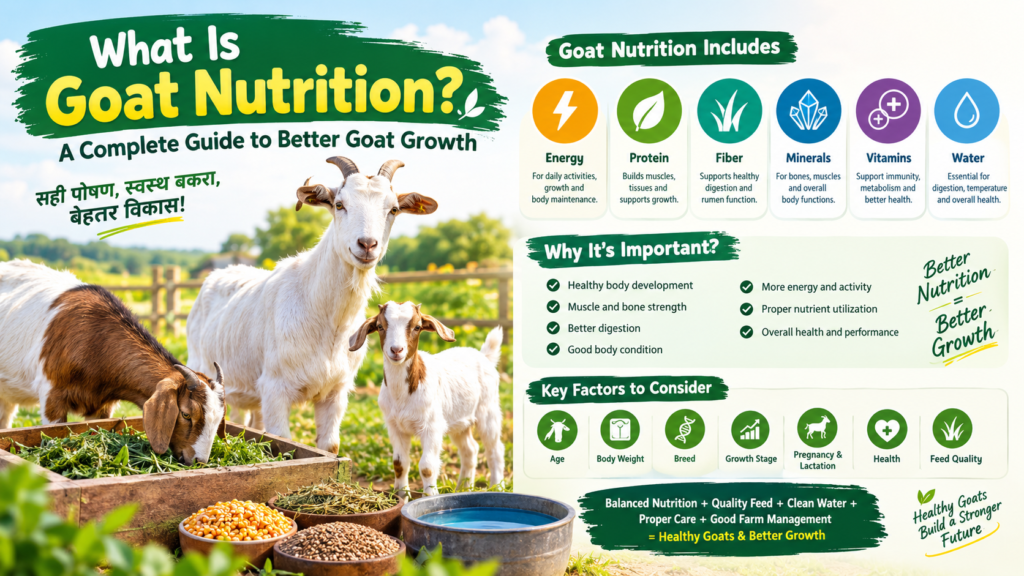
Goat nutrition includes everything a goat needs to maintain its body, stay active, grow properly and perform according to its stage of life. Energy, protein, fiber, minerals, vitamins and clean water all have an important role in a good feeding program.
Raising healthy and well-developed goats is not simply about giving them more feed. What matters more is whether their daily diet provides the right nutrients in the right balance.
For goat farmers, understanding these basics can make feeding decisions easier and help create better conditions for healthy growth.
In this guide, we will look at the main nutritional requirements of goats, the role of different nutrients, common feeding mistakes and how a well-planned nutrition program can support better goat growth.
What Is Goat Nutrition?
Goat nutrition is the practice of providing goats with the nutrients they need for growth, body maintenance, reproduction and overall health.
A goat’s nutritional needs are not the same throughout its life. A young kid, a growing bakra, an adult goat and a lactating doe can have very different requirements.
Factors such as:
- Age
- Body weight
- Breed
- Growth stage
- Activity level
- Pregnancy
- Lactation
- Overall health
- Quality of available forage
can all influence the type and amount of nutrition an animal requires.
This is why simply increasing the quantity of feed is not always the best way to improve growth.
Why Is Good Nutrition Important for Goats?
Nutrition provides the building blocks and energy needed for normal body functions.
When the overall feeding program is well balanced, it can support:
- Healthy body development
- Muscle and bone development
- Normal digestion
- Good body condition
- Daily activity and energy
- Proper nutrient utilization
- Overall health and performance
On the other hand, a diet that is poorly balanced may not provide the nutrients required by the animal, even when the goat appears to be eating enough.
The goal should therefore be better nutrition, not simply more feed.
Essential Nutrients Goats Need
A good goat feeding program normally combines several nutritional components. Each one has a different role.
1. Energy
Goats need energy for everyday activities, body maintenance, growth and other physiological functions.
Depending on the feeding system, energy can come from sources such as:
- Maize
- Barley
- Grains
- Formulated feeds
- Good-quality forage
Growing goats have increasing energy requirements as their bodies develop.
However, adding excessive amounts of high-energy feed is not a substitute for a balanced diet. The overall ration should be appropriate for the animal’s size, age and purpose.
2. Protein
Protein is an important nutrient for maintaining and developing body tissues, particularly muscles.
Depending on the farm’s feeding system, protein can come from:
- Legume fodder
- Oilseed meals
- Protein-rich feed ingredients
- Balanced commercial feeds
Growing goats need an appropriate supply of protein because their bodies are actively developing.
The right amount, however, depends on the animal and the rest of its diet. A protein source should therefore be considered as part of the complete feeding program rather than in isolation.
3. Fiber
Fiber is especially important for goats because they are ruminant animals.
Forage-based feeds such as:
- Green fodder
- Hay
- Dry fodder
- Suitable grasses
- Other quality forage
can contribute important fiber to the diet.
A feeding program that focuses heavily on concentrates while overlooking forage may not provide the balance needed for good digestive function.
Good-quality forage should remain an important part of goat feeding.
4. Minerals
Minerals are required for several normal body processes. They are particularly important when considering skeletal development, muscle function and other physiological activities.
Some important minerals for goats include:
- Calcium
- Phosphorus
- Magnesium
- Sodium
- Potassium
- Trace minerals
Calcium and Goat Development
Calcium is closely associated with normal bone development and skeletal health.
Growing goats need appropriate calcium along with phosphorus and other nutrients as part of a balanced diet.
Instead of looking at one mineral alone, farmers should consider the overall mineral intake of their goats.
5. Vitamins
Vitamins contribute to normal body functions and overall health.
Goats may obtain vitamins through forage and other dietary sources. Requirements can vary depending on factors such as diet quality, age, production stage and management conditions.
A balanced feeding program should therefore consider vitamins along with energy, protein, minerals and fiber.
6. Water: An Essential Part of Goat Nutrition
Water is sometimes forgotten when discussing goat nutrition, but it is one of the most basic requirements for a healthy animal.
Goats should have regular access to clean and fresh drinking water.
Water requirements can change depending on:
- Weather conditions
- Body size
- Feed type
- Activity
- Pregnancy
- Lactation
Why Clean Drinking Water Matters
Water containers should be cleaned regularly and drinking water should be kept as clean as practical.
Farmers should avoid:
- Stagnant water
- Dirty containers
- Contaminated water sources
- Long periods without access to drinking water
Good water management is a simple step that can make a significant difference to overall farm hygiene and feeding management.
How Does Nutrition Support Better Goat Growth?
Goat growth depends on more than nutrition alone. Genetics, management, environment, health and feeding practices also influence growth.
Nutrition provides the foundation by supplying the nutrients required for body development.
Rather than asking only:
“How much feed should I give my goat?”
it is better to ask:
“Is my goat receiving the nutrients it needs from its overall diet?”
The answer depends on the goat’s age, weight, breed, growth stage and purpose.
Nutrition for Young Goats
Young goats have different nutritional needs compared with mature animals.
Their feeding program should provide appropriate nutrition to support:
- Early development
- Healthy body growth
- Muscle development
- Bone development
- Normal activity
Feed should be introduced and managed according to the animal’s age and feeding system.
Nutrition for Growing Goats
Growing goats need a consistent supply of appropriate nutrients.
A practical feeding program should consider:
- Energy
- Protein
- Fiber
- Minerals
- Vitamins
- Water
Farmers should also monitor body condition and avoid making sudden changes to the feeding routine.
Nutrition for Adult Goats
Adult goats generally require nutrition for body maintenance, activity and reproduction, depending on their role on the farm.
Their diet should be adjusted according to whether they are being maintained, bred, producing milk or performing another specific role.
Nutrition During Pregnancy and Lactation
Pregnancy and lactation can increase nutritional demands.
During these stages, the feeding program should be reviewed carefully so that the animal receives suitable energy, protein, minerals, vitamins, forage and water.
Because nutritional requirements can vary considerably between animals, professional advice may be useful when developing a specific ration.
Common Goat Feeding Mistakes
Good feeding is not only about what you provide. It is also about avoiding practices that can create nutritional or digestive problems.
Giving Too Much Feed
More feed does not automatically mean faster or better growth.
Overfeeding can increase feed costs and may result in an unbalanced diet.
The focus should be on appropriate nutrition rather than maximum feed quantity.
Ignoring Minerals
A diet can appear adequate while still being short of certain minerals.
Mineral requirements should be considered when evaluating the complete feeding program.
Using Poor-Quality Feed
Moldy, spoiled or contaminated feed should not be considered a normal part of the diet.
Feed should be stored properly and protected from moisture, contamination and spoilage.
Changing Feed Suddenly
Goats have a specialized digestive system, and sudden changes in diet can cause digestive disturbances.
Whenever possible, changes to the feeding program should be introduced gradually and monitored carefully.
How to Improve Goat Nutrition on Your Farm
Improving goat nutrition does not necessarily require a complete change in your farming system.
Start by reviewing the basics.
Step 1: Understand the Current Diet
Make a list of everything the goats receive during the day, including:
- Green fodder
- Dry fodder
- Hay
- Concentrate feed
- Mineral sources
- Supplements
- Drinking water
This gives you a clearer picture of the animal’s overall nutritional intake.
Step 2: Consider the Goat’s Stage of Life
Nutritional requirements can vary significantly between:
- Kids
- Growing goats
- Adult goats
- Pregnant does
- Lactating does
- Breeding animals
The feeding program should be adjusted accordingly.
Step 3: Maintain Feed Quality
Good-quality feed is an important part of good nutrition.
Store feed in a dry and clean area and protect it from moisture, pests and contamination.
Step 4: Provide Fresh Drinking Water
Make clean drinking water available regularly and clean the water containers as needed.
Step 5: Observe the Animals
Regular observation can help farmers notice changes in:
- Appetite
- Activity
- Body condition
- Growth
- Coat appearance
- General behavior
If you notice persistent or unusual changes, consult a veterinarian or qualified animal nutrition professional.
What Is the Role of Goat Nutrition Supplements?
Supplements can be useful when they are appropriate for the animal’s nutritional needs and existing diet.
However, supplements should support a good feeding program rather than replace it.
Before introducing a supplement, consider:
- Age of the goat
- Body weight
- Existing diet
- Growth stage
- Overall condition
- Current mineral intake
- Other supplements already being used
Always follow the product label and recommended usage instructions.
When there is uncertainty about a goat’s nutritional requirements, professional veterinary or animal nutrition advice is recommended.
BUCKUP™ Goat Nutrition Range
For farmers looking for nutritional products to complement their goat feeding program, BUCKUP™ Goat Nutrition offers products developed around different nutritional support needs.
Bakra Power+
Bakra Power+ is formulated as a nutritional product for supporting energy and strength as part of an appropriate feeding and farm management program.
For growing goats, nutritional support works best when combined with suitable feed, forage, clean water and proper care.
BakraLiv+
BakraLiv+ is designed around liver and digestive nutritional support.
A healthy digestive system plays an important role in how an animal utilizes nutrients from its diet. BakraLiv+ can be included as part of a broader goat nutrition and management program according to product directions.
BakraCal
BakraCal is focused on calcium-related nutritional support.
Calcium is an important mineral for normal skeletal development, particularly during growth. However, calcium should always be considered alongside the animal’s overall mineral and nutritional intake.
A Complete Approach to Goat Nutrition
The best approach is not to depend on a single product or feed ingredient.
Think of goat nutrition as a complete system:
Balanced Nutrition + Quality Feed + Clean Water + Proper Care + Good Farm Management
This combination provides a stronger foundation for healthy goat development.
Goat Nutrition at Different Growth Stages
Goats do not have identical nutritional requirements throughout their lives.
Kids
Kids require appropriate nutrition during their early development. Their feeding program should be managed according to their age, development and production system.
Growing Goats
Growing goats require a balanced supply of nutrients to support their developing body.
Energy, protein, fiber, minerals, vitamins and water all have a role in their feeding program.
Adult Goats
Adult goats primarily need nutrition for body maintenance, activity and reproduction or production requirements.
Pregnant and Lactating Goats
Nutritional demands may increase during pregnancy and lactation. Their feeding program should therefore be evaluated and adjusted according to their condition and stage.
Simple Goat Nutrition Checklist for Farmers
Before considering your goat feeding program complete, check these basics:
✔ Good-quality forage
✔ Appropriate energy and protein sources
✔ Suitable mineral intake
✔ Adequate vitamins
✔ Clean and fresh drinking water
✔ Feed changes introduced gradually
✔ Proper feed storage
✔ Regular observation of body condition
✔ Nutrition adjusted according to growth stage
✔ Veterinary or professional guidance when needed
Final Thoughts
Healthy goat growth does not come from simply increasing the amount of feed.
A better approach is to focus on the quality and balance of the complete diet.
Goats need appropriate amounts of energy, protein, fiber, minerals, vitamins and water. Their requirements can change with age, body weight, breed, growth stage, pregnancy, lactation and overall management.
For farmers, the practical goal should be simple: provide good-quality feed, maintain clean water, pay attention to mineral and nutritional requirements, monitor the animals regularly and make feeding changes carefully.
Nutritional supplements such as the BUCKUP™ Goat Nutrition Range can be considered when they fit the animal’s nutritional needs and existing feeding program.
Better Goat Growth starts with Better Nutrition.
Frequently Asked Questions About Goat Nutrition
What is goat nutrition?
Goat nutrition is the process of providing goats with the nutrients they need for normal growth, maintenance, reproduction and overall health. These include energy, protein, fiber, minerals, vitamins and water.
What should I feed my goat for better growth?
A suitable goat diet generally includes quality forage, appropriate energy and protein sources, minerals, vitamins and clean water. The exact feeding program should depend on the goat’s age, weight, breed, growth stage and purpose.
Does giving more feed make goats grow faster?
Not necessarily. More feed does not automatically mean better growth. A balanced diet containing the appropriate nutrients is more important than simply increasing feed quantity.
Why are minerals important for goats?
Minerals such as calcium, phosphorus, magnesium, sodium and trace minerals contribute to several normal body functions. Calcium and phosphorus, for example, are important considerations for normal skeletal development.
How important is water for goat growth?
Water is essential for goats. Clean drinking water should be available regularly, with requirements varying according to factors such as weather, body size, feed, pregnancy, lactation and activity.
Can goat supplements be used with regular feed?
Yes, nutritional supplements can be used when appropriate for the animal and its existing diet. They should complement a balanced feeding program rather than replace quality feed, forage or water.
How can I improve goat nutrition on my farm?
Start by reviewing the complete daily diet. Check forage quality, energy and protein sources, mineral intake, water availability and feed storage. Also consider the age and growth stage of the goats.
What is the role of BUCKUP™ Goat Nutrition products?
BUCKUP™ offers nutritional products designed around different support needs, including energy and strength support, liver and digestive support, and calcium-related nutritional support.
Is goat nutrition the same for every goat?
No. Nutritional requirements can differ according to age, body weight, breed, growth stage, pregnancy, lactation, activity and overall health.
What is the most important thing to remember about goat nutrition?
Do not focus only on the quantity of feed. Focus on the overall balance of the diet, feed quality, clean water, appropriate mineral intake and proper farm management.